Skip to content

What Operational Leadership Actually Looks Like Under Pressure

Operational leadership is often discussed in abstract terms—culture, accountability, optimization, execution.

But what does operational thinking actually look like when performance, systems, coaching, KPIs, and scalability all intersect in a real-world environment?

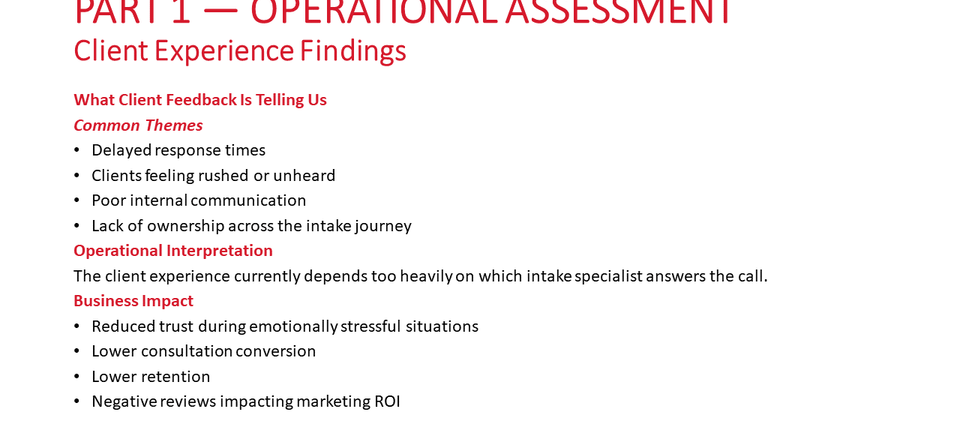
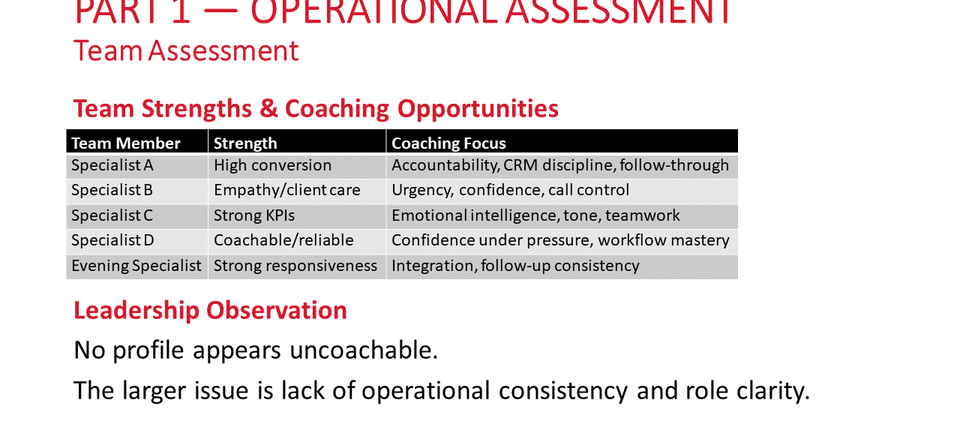
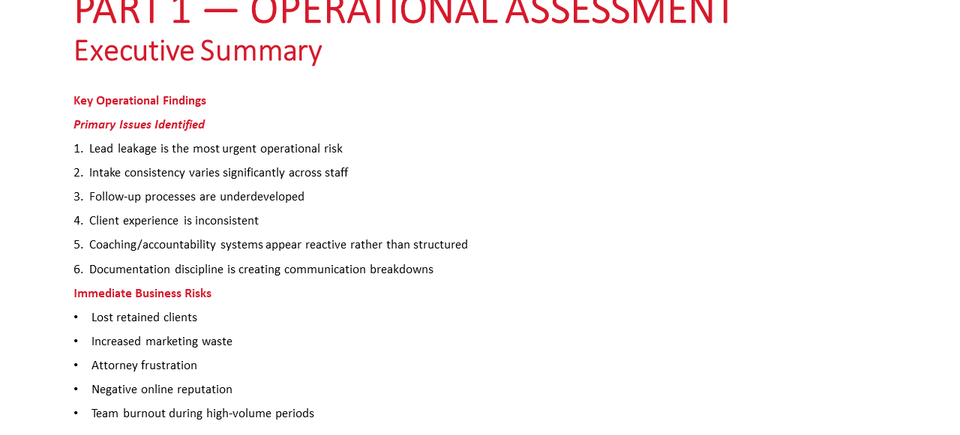
Recently, I completed an in-depth operational assessment exercise centered around intake operations, performance accountability, workflow consistency, and leadership structure within a high-volume client-facing environment.

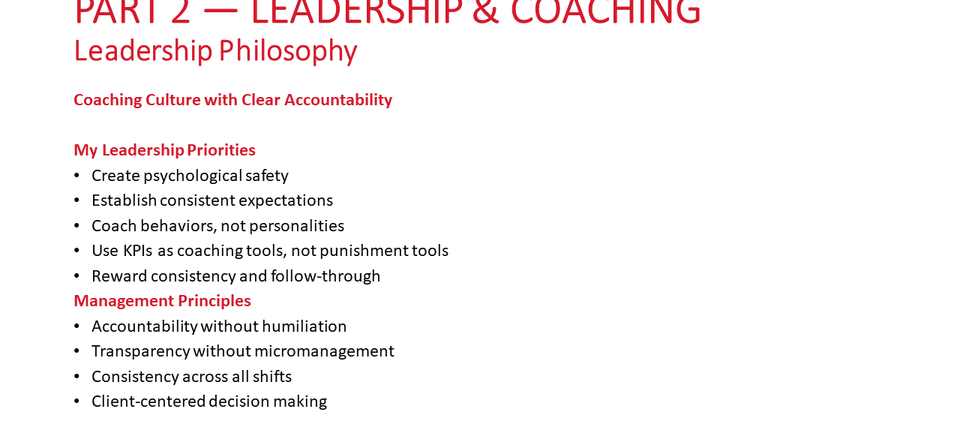
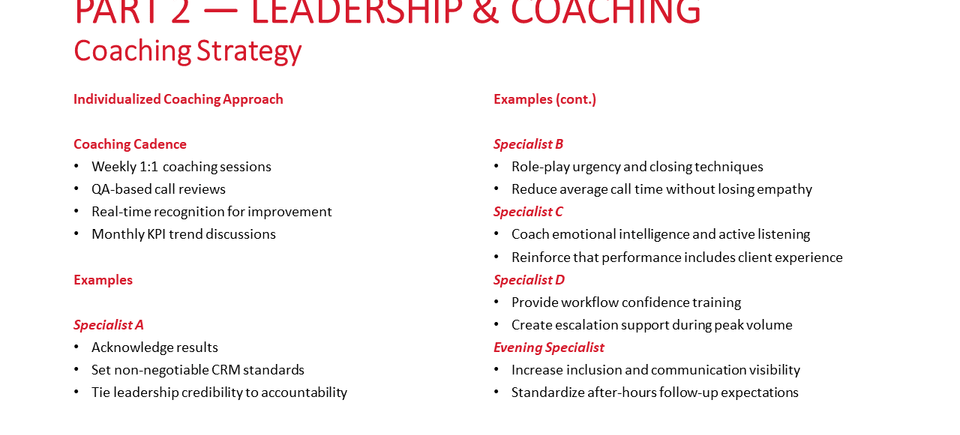
Below are several redacted framework excerpts and operational artifacts that reflect how I approach systems thinking, performance optimization, and operational leadership design.
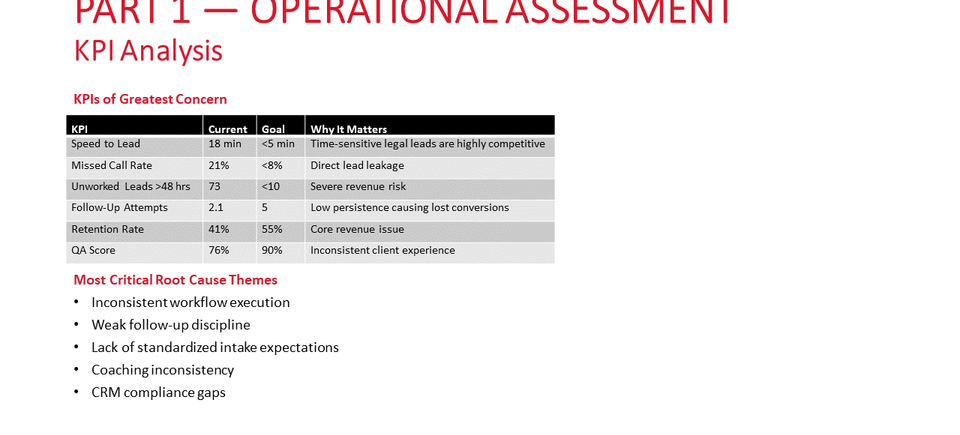
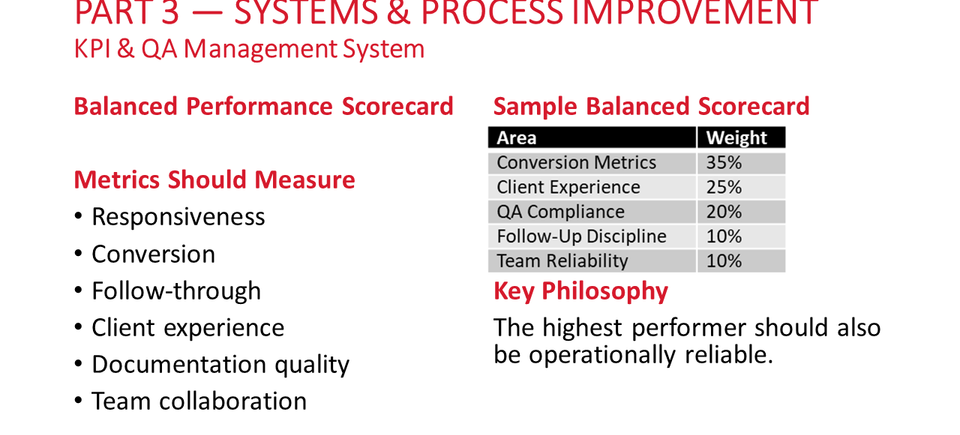
KPI PERFORMANCE ARCHITECTURE

Strong intake environments are rarely improved through motivation alone.

Performance consistency typically comes from:

 
  • visibility,
  • coaching cadence,
  • escalation logic,
  • and measurable accountability architecture.

The first step is defining which metrics actually influence operational outcomes rather than simply reporting activity.

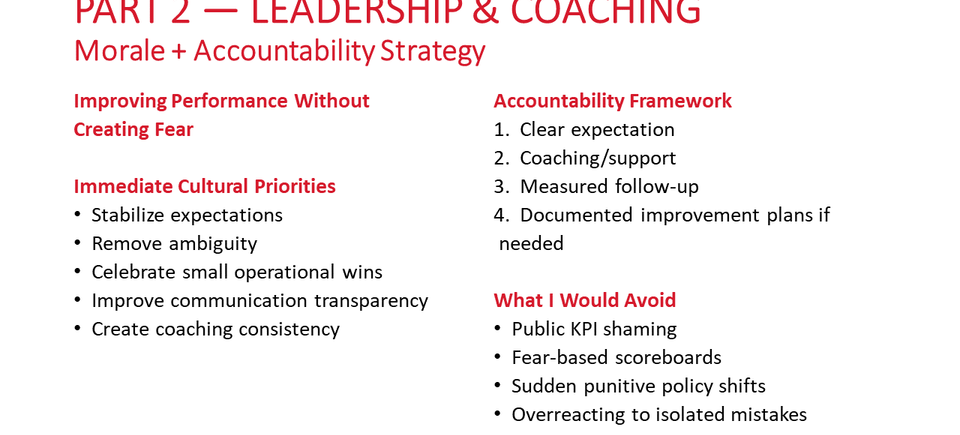
COACHING & ACCOUNTABILITY MODEL

Most intake performance issues are not isolated skill problems.

They are:

 
  • reinforcement problems,
  • consistency problems,
  • or operational clarity problems.

Coaching systems should create:
 
  • repeatability,
  • behavioral consistency,
  • and real-time accountability visibility.

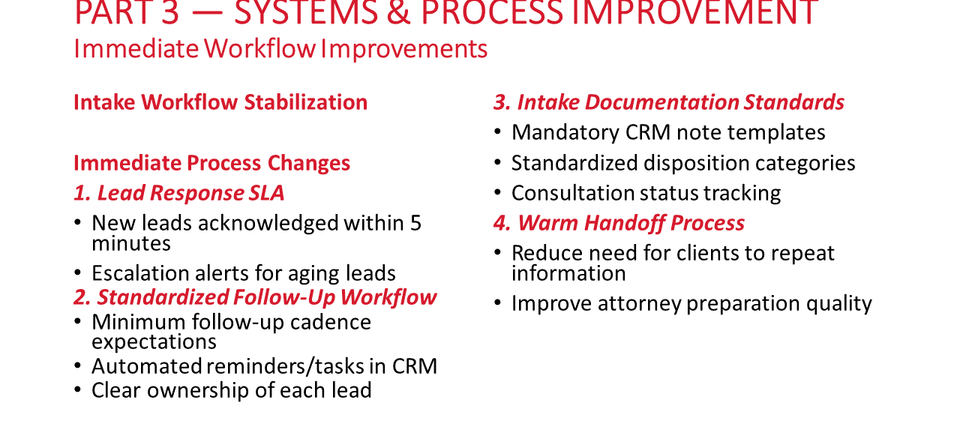
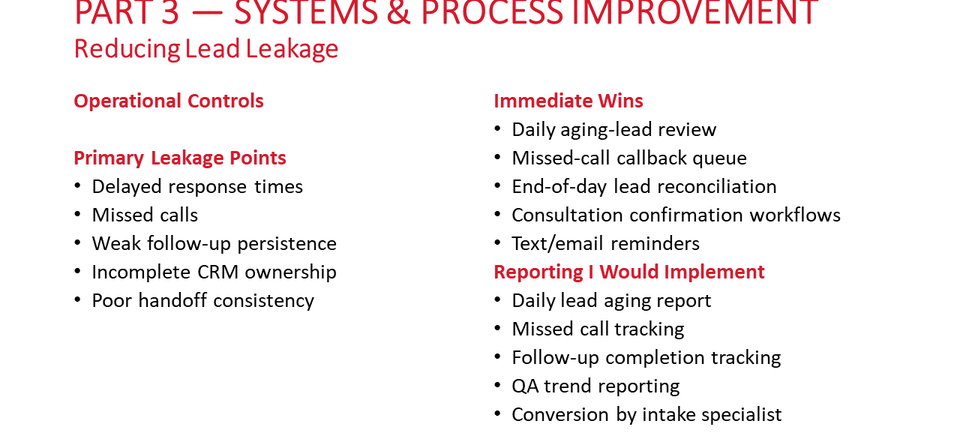
PROCESS & WORKFLOW DESIGN

Operational friction is often hidden inside:
 
  • handoff gaps,
  • inconsistent workflow ownership,
  • delayed escalation,
  • or undefined process accountability.

System design matters because operational inconsistency compounds over time.

EMBEDDED VS FRACTIONAL LEADERSHIP

One of the most valuable takeaways from this experience reinforced a distinction I’ve seen repeatedly across organizations:

There is a meaningful difference between:

 
  • embedded operational leadership
      and
  • fractional systems leadership.

Both models create value, but they solve different operational problems.

Organizations requiring:

 
  • real-time coaching,
  • cultural reinforcement,
  • and continuous team immersion

often need embedded operational leadership structures.

Organizations seeking:

 
  • scalability,
  • process optimization,
  • KPI redesign,
  • and operational visibility

may benefit more from targeted systems-focused operational intervention.

The key is structural alignment before execution begins.

FINAL PRINCIPLE

Operational success is rarely constrained by effort alone. More often, it is constrained by clarity of structure, accountability design, and leadership alignment.